Is It Worth Replacing a 15 Year Old Boiler?

Last Updated: November 12, 2026
Quick Summary
Is it worth replacing a 15 year old boiler? It depends on performance, repair costs and running costs, not age alone. A well-serviced boiler needing no major parts may have years left, but frequent call-outs or high running costs usually make replacement the better long-term choice.
If a repair is small and the boiler is otherwise sound, repair it.
Replace the boiler if repairs are frequent, parts are hard to find, or running costs are high.
Modern condensing boilers recover heat from flue gases, so they use less fuel.
Watch for pressure drops, ignition problems, uneven radiator heat and lukewarm hot water.
Have any suspected fault checked by a Gas Safe registered engineer, never attempting gas work yourself.
Table of Contents
Is it worth replacing a 15 year old boiler? For most homeowners, it depends on performance, repair costs and running costs.
Is It Worth Replacing a 15 Year Old Boiler? Weighing the Pros and Cons
Age alone rarely settles it: a well-serviced 15 year old boiler needing no major parts may have years left, while one that loses pressure or needs frequent call-outs is a different case.
Pros: Modern condensing boilers are generally more efficient, lowering running costs; a new boiler brings a fresh warranty; breakdown risk falls; and you can plan installation rather than react to an emergency.
Cons: The upfront cost is significant and depends on the model and work involved; installation can disrupt the household for a day or more; and a still-reliable boiler means paying for performance you do not yet need.
A simple rule: if a repair is small and the boiler is otherwise sound, repair it. If repairs are frequent, parts are hard to find, or running costs are high, replacement is usually the better long-term choice.
Signs a Boiler Is Failing and Needs Attention
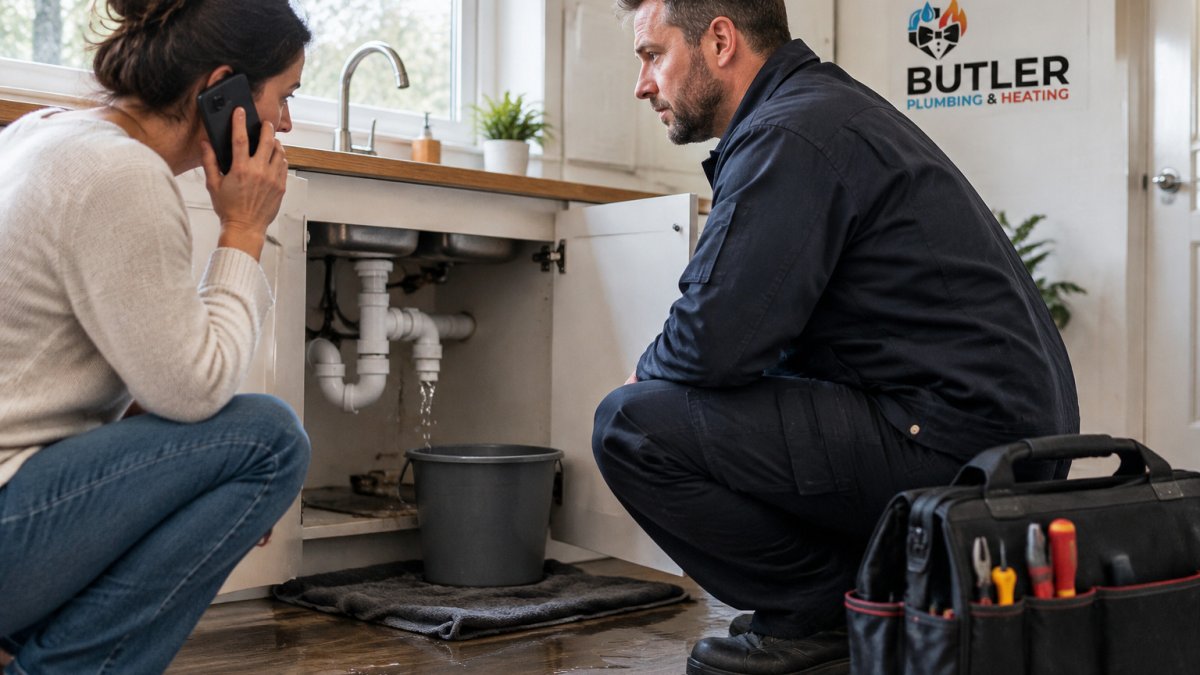
Watch for frequent pressure drops, ignition struggles, uneven or slow radiator heat, lukewarm hot water, banging or gurgling noises, visible leaks or rust, and rising energy bills without a change in use.

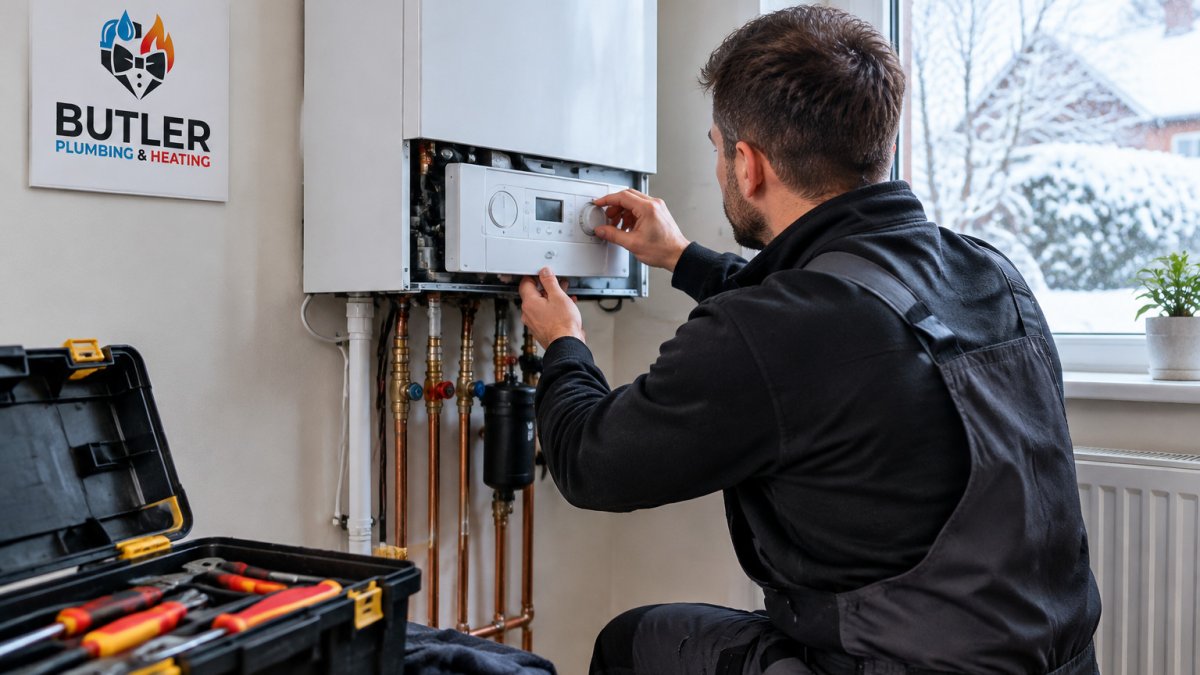
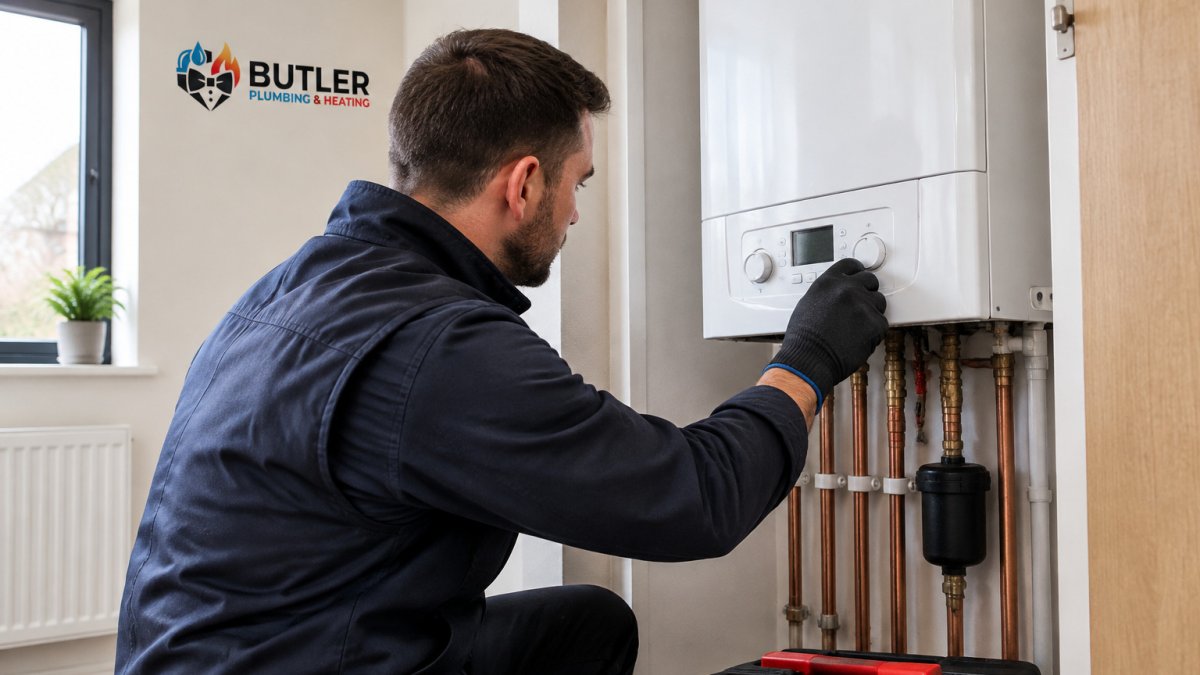
If you spot any of these, arrange a check with a Gas Safe registered engineer and never attempt gas work yourself. Butler Plumbing offers boiler service or repair for households wanting the fault checked before deciding.
The article lists several warning signs that a boiler may be failing, and a quick reference helps you decide what to do next.
Sign | What it may mean | What to do |
Frequent pressure drops | Possible leak or fault in the system | Arrange a check with a Gas Safe engineer |
Ignition struggles | Ignition or burner fault | Arrange a check with a Gas Safe engineer |
Uneven or slow radiator heat | Circulation or sludge problem | Arrange a check with a Gas Safe engineer |
Lukewarm hot water | Heat exchanger or internal fault | Arrange a check with a Gas Safe engineer |
Banging or gurgling noises | Air or water circulation issue | Arrange a check with a Gas Safe engineer |
Visible leaks or rust | Failing components or corrosion | Arrange a check with a Gas Safe engineer |
Rising energy bills without change in use | Declining efficiency | Arrange a check to compare options |
Benefits of Modern Condensing Boilers and How to Choose a New Boiler for Your Home
A condensing boiler recovers heat from flue gases that older boilers release, so it uses less fuel to heat the same home, most noticeable in homes that run the heating for long periods.
When choosing a replacement, consider size (matching output to rooms, insulation and hot water use), type (combi for smaller homes, system or regular for larger demand), controls (smart or programmable to heat only the rooms you use), and a Gas Safe registered installer who explains options and warranty clearly.
Replacing a 15 year old boiler is worth considering when repair costs rise, reliability slips or running costs are high. If unsure, book a boiler assessment to compare options with a professional.
Frequently Asked Questions
How long should a gas boiler typically last?
A gas boiler's life depends on how well it has been serviced, the water quality in the area and how hard it works. Annual servicing by a Gas Safe registered engineer helps identify wear on seals, the ignition system and the heat exchanger early. A boiler that is still running at 15 years is not automatically unsafe, but it is worth having it checked, as parts become harder to source and efficiency tends to fall behind modern models. A Gas Safe registered engineer can assess your boiler and advise on the best option.
What are the signs that a boiler needs replacing?
Frequent breakdowns, repeated repairs on the same components, rising energy bills without a change in use, uneven radiator heating, yellow or orange flames, unusual noises and visible corrosion around the flue are all common signs. Pressure that keeps dropping or a boiler that needs constant resetting also points to a system nearing the end of its life. If you notice any signs of a gas leak or carbon monoxide, turn the boiler off and contact a Gas Safe registered engineer immediately.
Are parts still available for 15-year-old boilers?
For many popular models, parts can still be sourced, but availability falls as a boiler ages and manufacturers stop producing spares. Older components may take longer to order, which can extend downtime during a breakdown. Asking your engineer whether parts are readily available for your specific model helps you weigh the cost of a repair against the benefits of a modern replacement.
Comments